
Visibility Wound
Updated: Feb 13

Hello everyone!
Welcome, Welcome, Welcome!
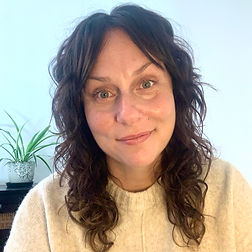
This is Karen, your friendly neighborhood Seasons therapist, and this week we are going to kick off our blog post with a little reality and a lot of vulnerability….
To be honest, the first experiences I had at the thought of contributing to a blog were filled with both fear and excitement! Though this is something I have always had interest in, narratives of not being good enough, fears of being seen, AND feelings of excitement at potentially connecting with all of you, came rushing in. The more I spoke with other individuals, therapists or not, I have noticed that many of us carry a version of this fear of being seen. Thus, this week’s topic was born….Visibility Wounds!
Visibility Wound?
A visibility wound is when it feels (and/or is!) unsafe to be seen. When the embodied wisdom of our experiences has shown us that it is safer to be invisible, smaller, or different than we are. When we learn that we must shrink, hide, or change ourselves to ensure our needs are met, whether that is safety, connection or belonging, among others. Whether this is our achievements, our feelings, our opinions/voice, our identity, or our very existence. When it feels like or is unsafe to be our true self and to let ourselves be seen as thus, a deep sense of knowing, of felt unsafety develops, and we learn that safety lies in being invisible, in hiding, in staying quiet, in changing ourselves. We learn that to have our needs met, we must become invisible. This is not pathology, this is a learned and necessary survival strategy; a beautiful, intelligent, life-saving, and impactful survival strategy.
How does this develop?
Many of us experience visibility wounds and develop some degree of a fear of being seen or judged through various circumstances. These concepts of wounding and judgement towards others are woven through the fabric of our society through hierarchical means, the process of ‘othering,’ and experiences of marginalization in all its forms; this creates and perpetuates visibility wounds and the constructs that on all levels keep these means of power and control in place. These constructs can be so deeply woven throughout popular culture, socio-political climates, socio-cultural norms/narratives and the institutions of work, family, school, religion, marriage, industries, etc. that they can become normalised and unseen. When it is physically and emotionally safer to not be seen, to be different than you are, to fit into socio-cultural ideals/narratives, to keep your own thoughts/opinions/identities hidden we unconsciously develop these adaptations to keep us safe, connected, and our needs met. This is evident throughout macro, meso, and micro levels: political climates, identities that are subjected to discrimination, family/relationship and community dynamics, workplaces, industries, the list goes on.
This is scalable to massive socio-cultural and political realms, to markers of success and status symbols, to beauty/fitness industries, to family/friend/partner/community/work relationships and roles, and to our relationships with ourselves. When we are told continuously from any of these various avenues that we are not enough as we are, that we are too much as we are, or that we must change, hide, shrink, and not show up as our true selves to be safe, accepted, fed, housed, we learn to adapt – it is safety and survival.
Examples of this include engrained systemic bias, policies/programs, prejudice, all the ‘isms’ and the concept of a certain way of being/looking/living, etc. as the marker of ‘normal’, ‘worthy’ or ‘good.’ This is also evident in industries that financially benefit from insecurities or unrealistic standards, and from markers of success and status symbols. It shows up throughout family and relationship systems and dynamics in both loving and well-meaning environments, and unhealthy environments; we may attune and shrink or hide to appease others, avoid tension or conflict, or to be the easy one in an already overwhelmed situation. Throughout work and social environments, we may also develop these adaptations and this wound of being visible; whether it is through learning that to be included, accepted, or simply not targeted we must downplay, hide, or wear a mask.
These experiences can be deeply impactful. We may constantly scan and attune to our environment and the people around us, becoming hypervigilant and hypersensitive to others. We may develop a lens that interprets all interactions through this perspective of over responsibility, we may develop beliefs about the world and ourselves that reinforce these fears and narratives, whether they represent our immediate reality or not. Our thoughts change, our beliefs change, our inner narratives change, our brain adapts, and our body and nervous system shift; how we show up in the world changes. This is our brain and body noticing, responding, and adapting to ensure safety, connection, and the meeting of our basic needs. Those of which are necessary for our survival throughout the various stages of our lives.
How do we work with this?
Ironically, it is through being visible (when it is safe to do so) and standing in our true Self, whatever may come, that we begin to unravel the rigidity and the hold that this narrative has on us. We slowly begin to trust that we are enough, and we will be ok.
I know, terribly scary! I agree! Hello blog post! ;)
It’s like riding an emotional rollercoaster full of fear and courage and vulnerability….and it is through exactly this- the process of being known, of allowing someone to know us, allowing ourselves to be seen, and implementing healthy boundaries- this brave act of self love that we eventually find our healing, our inner strength, our self-trust, and our peace.
Safety is found when those survival adaptations are no longer necessary, when we have the capacity and insight around these dynamics, and when we can meet these automatic responses with compassion, kindness, and somatic and cognitive safety. When we find insight, when we begin to question, when we find those people and environments that help remind us that it is safe to be us!! That it is more than ok, that we are celebrated as we are, safety grows. It comes when we begin to look for internal validation, when we foster approval, compassion, and a sense of self-love from within. Safety begins with safety.
Stepping away from an environment that is actively contributing to a visibility wound and to the felt need for invisibility is unfortunately not always possible. Within these situations, our healing and power lie within ourselves. The knowledge that we are responding exactly as we are designed to respond to keep us safe, and that this is not pathology, rather it is a highly intelligent and effective survival response. When we acknowledge what is happening and why we respond in the manner we do, we separate the wound from us, we decrease inherency, we neutralize shame, we normalize responses, and we eliminate pathology. With this knowledge, we broaden our capacity for awareness, and with awareness of our thoughts, our narratives, and our physical signals, we can continue this separation from the past belief of pathology and inherency, to one of survival responses and the awakening of our true self.
Boundaries, self compassion, and the beginnings of recognizing our own internal Self, are important concepts as we navigate this. Leaning into internal validation, internal acceptance, self-love and self-compassion for our humanness and ourselves exactly as we are, is part of healing the visibility wound, and in implementing a healthy boundary between others and our own self-concept. Learning about how the dynamics of this wounding, whether it is on a macro, meso, or micro level, has absolutely nothing to do with us, is imperative. When we begin to understand how our invisibility, our shrinking, our attuning were part of larger systems of our society/culture, of political landscapes, of institutions, of family dynamics and roles, of power and control, of feelings of fear and insecurity, and as a survival adaptation, we begin to see the patterns and dynamics that kept us safe, and separate the responses, the judgements, and the narratives from us as our true Self.
Leaning into safety, what we feel we need, and what feels helpful for us are important parts of healing and moving through this wound. Noticing and bringing awareness to our physical body sensations, mapping our somatic experiences, and beginning to listen and trust this embodied wisdom; leaning into somatic regulation strategies, learning our system, our cues, and what is helpful for us is imperative and will be different for each of us. This requires patience, trial and error, and remembering that it is a practice and a journey.
My hope for you?
Imagine safety. What would it feel like to be seen and valued, what would it look like, what would be happening or not happening, how would you know? Where in your life do you see or feel these things? How can you cultivate this? How can you create this in yourself? Self-compassion, kindness towards ourselves, pausing before judgement if we are unable to abstain from judgement: these are all important practices that we can employ towards ourselves. It does not have to be perfect, it may feel uncomfortable at first. Go slowly, listen to your body, breathe, and move out of it when needed.
Find safety if possible, wherever that may be; with a friend, a coworker, a teacher, in therapy, on a team, in a club/class, or with yourself. Engage in self-compassion and allow yourself to be exactly where you are in this journey and know that it is ok, that it is a process. You are on it, doing exactly what you need to do to keep yourself safe, and that is beautiful. You are not too much, you are not too little, you are human, you are worthy and enough exactly as you are. Safety, healing, and embodiment of this concept has far reaching implications on not only us, but those around us and the world we live in.


This post offers useful reminders for homeowners who often postpone small repairs. Even minor wiring concerns deserve attention before they grow worse. Reliable electrical services near me in Arden-Arcade, CA can help resolve issues safely while avoiding larger repair costs later.
Validation on both sides, the power to be your genuine self or to recognize when your self needs protection. It will always come down to learning about and loving yourself. Thanks For the read.